
This is the third Workshop «Imaging and Machine Learning» within the Mathematics of Imaging series organized in Paris this semester (videos of Workshop 1 are here, videos of Workshop 2 are here)
Structured prediction via implicit embeddings - Alessandro Rudi - Workshop 3 - CEB T1 2019
A Kernel Perspective for Regularizing Deep Neural Networks - Julien Mairal - Workshop 3 - CEB T1 2019
Optimization meets machine learning for neuroimaging - Alexandre Gramfort - Workshop 3 - CEB T1 2019

Random Matrix Advances in Machine Learning - Romain Couillet - Workshop 3 - CEB T1 2019
Iterative regularization via dual diagonal descent - Silvia Villa - Workshop 3 - CEB T1 2019
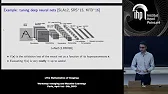
Scalable hyperparameter transfer learning - Valerio Perrone - Workshop 3 - CEB T1 2019
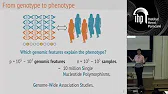
Using structure to select features in high dimension. - Chloe-Agathe Azencott - Workshop 3 - CEB T1 2019
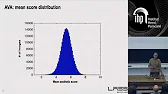
Predicting aesthetic appreciation of images. - Naila Murray - Workshop 3 - CEB T1 2019

Learning Representations for Information Obfuscation (...) - Guillermo Sapiro - Workshop 3 - CEB T1 2019

Convex unmixing and learning the effect of latent (...) - Guillaume Obozinski - Workshop 3 - CEB T1 2019

Revisiting non-linear PCA with progressively grown autoencoders. - José Lezama - Workshop 3 - CEB T1 2019

On the several ways to regularize optimal transport. - Marco Cuturi - Workshop 3 - CEB T1 2019

Combinatorial Solutions to Elastic Shape Matching. - Daniel Cremers - Workshop 3 - CEB T1 2019
L’intelligence Artificielle est-elle Logique ou Géométrique ? - Stephane Mallat - Grand Public -CEB T1 2019
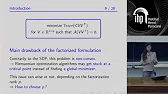
Rank optimality for the Burer-Monteiro factorization - Irène Waldspurger - Workshop 3 - CEB T1 2019

Bayesian inversion for tomography through machine learning. - Ozan Öktem - Workshop 3 - CEB T1 2019

Understanding geometric attributes with autoencoders. - Alasdair Newson - Workshop 3 - CEB T1 2019
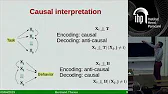
Multigrain: a unified image embedding for classes (...) - Bertrand Thirion - Workshop 3 - CEB T1 2019
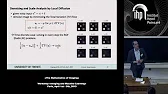
Deep Inversion, Autoencoders for Learned Regularization (...) - Christoph Brune - Workshop 3 - CEB T1 2019
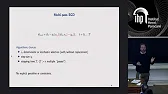
Optimal machine learning with stochastic projections (...) - Lorenzo Rosasco - Workshop 3 - CEB T1 2019

Roto-Translation Covariant Convolutional Networks for (...) - Remco Duits - Workshop 3 - CEB T1 2019

Unsupervised domain adaptation with application to urban (...) - Patrick Pérez - Workshop 3 - CEB T1 2019

Designing multimodal deep architectures for Visual Question (...) - Matthieu Cord - Workshop 3 - CEB T1 2019

Towards demystifying over-parameterization in deep (...) - Mahdi Soltanolkotabi - Workshop 3 - CEB T1 2019

Nonnegative matrix factorisation with the beta-divergence (...) - Cédric Févotte - Workshop 3 -CEB T1 2019

Autoencoder Image Generation with Multiscale Sparse (...) - Stéphane Mallat - Workshop 3 - CEB T1 2019

Learning from permutations. - Jean-Philippe Vert - Workshop 3 - CEB T1 2019
Learned image reconstruction for high-resolution (...) - Marta Betcke - Workshop 3 - CEB T1 2019

Contextual Bandit: from Theory to Applications. - Claire Vernade - Workshop 3 - CEB T1 2019

On the Global Convergence of Gradient Descent for (...) - Francis Bach - Workshop 3 - CEB T1 2019
Follow @NuitBlog or join the CompressiveSensing Reddit, the Facebook page, the Compressive Sensing group on LinkedIn or the Advanced Matrix Factorization group on LinkedIn
 Liked this entry ? subscribe to Nuit Blanche's feed, there's more where that came from. You can also subscribe to Nuit Blanche by Email.
Other links:
Paris Machine Learning: Meetup.com||@Archives||LinkedIn||Facebook|| @ParisMLGroup< br/> About LightOn: Newsletter ||@LightOnIO|| on LinkedIn || on CrunchBase || our Blog
About myself: LightOn || Google Scholar || LinkedIn ||@IgorCarron ||Homepage||ArXiv


 Nuit Blanche http://bit.ly/2YOKLNi May 25, 2019 at 08:11PM
Comments
Post a Comment