Every weekday evening, our editors guide you through the biggest stories of the day, help you discover new ideas, and surprise you with moments of delight. Subscribe to get this delivered to your inbox.
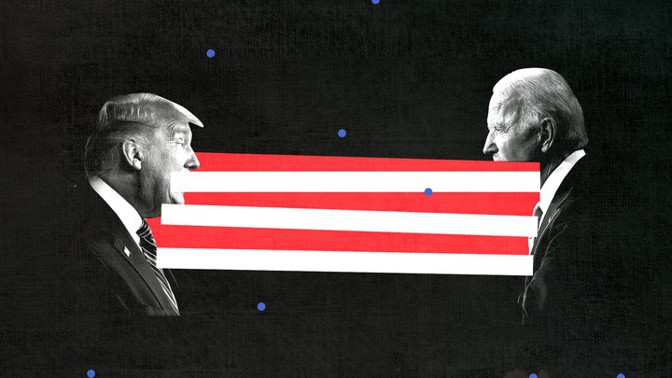
Time froze. States stopped being called.
For days, Joe Biden seemed perma-stuck on the precipice of victory. And the sitting president seemed to know it, delivering extraordinary and baseless claims about election fraud. Fox News faced a choice, and it chose Donald Trump—and his followers—over democracy.
Americans scrolled and scrolled and scrolled, but the answers they sought remained out of reach.
These are the dispatches from this strange election purgatory. This newsletter does not reach your inbox with the closure you seek. But perhaps it can help you make sense of this moment.
-
Why wasn’t this election the Biden landslide the polls predicted? Annie Lowrey weighs five economic factors that spared the incumbent from a more lopsided loss.
-
Trump won’t accept defeat. Ever. “His personal need to live in a perpetual fantasyland, a world where he is always winning, is so overpowering that he will do anything to maintain it,” Anne Applebaum writes.
-
A better strongman may capitalize on his legacy. “Make no mistake: The attempt to harness Trumpism—without Trump, but with calculated, refined, and smarter political talent—is coming,” Zeynep Tufekci warns.

What to do this weekend
Take a break. When’s the last time you put down the phone? This election is incredibly consequential. But remember: Too much political news can be bad for your well-being.
Read a book. Revisit our list of novels for feeling better. Looking for inspiration for your next big quarantine reading project? Our senior art director Oliver Munday undertook an epic one: Proust.
Or a work of journalism that has nothing to do with American politics. Squirm your way through this tale of real-life flesh-eating worms. Or explore why the “Free Britney” saga feels so familiar.
Watch. We recently covered:
-
The comedian Sarah Cooper’s Netflix special (“her biggest platform yet”);
-
HBO’s The Undoing (“an uneasy fit” for this moment);
-
The new Borat movie (less satire than exposé);
-
Apple TV+’s On the Rocks (a dose of much-needed escapism);
-
Totally Under Control on Hulu (the COVID-19 documentary all Americans need to see);
-
Time (“a gripping documentary that reframes the perception of mass incarceration”); and
-
Aaron Sorkin’s The Trial of the Chicago 7 (“a timely and timeless message”).
Nothing catch your eye? Try a classic: It’s comfort-movie season.
Listen. Now would be a good time to blast our election-anxiety playlist.
Tour America from your couch. Our “Fifty” project, from photo editor Alan Taylor, highlights extraordinary photography of each U.S. state. This week’s selection is known as the Magnolia State. Can you guess which state that is?
If you must refresh … We built a site for that: dowehaveapresidentyet.com.
Did someone forward you this newsletter? Sign up here. Need help? Contact Customer Care
 The Atlantic https://ift.tt/3p7OHXd November 07, 2020 at 03:43AM
Comments
Post a Comment